Judging a cigar by its ash - with a discerning eye
5 min read
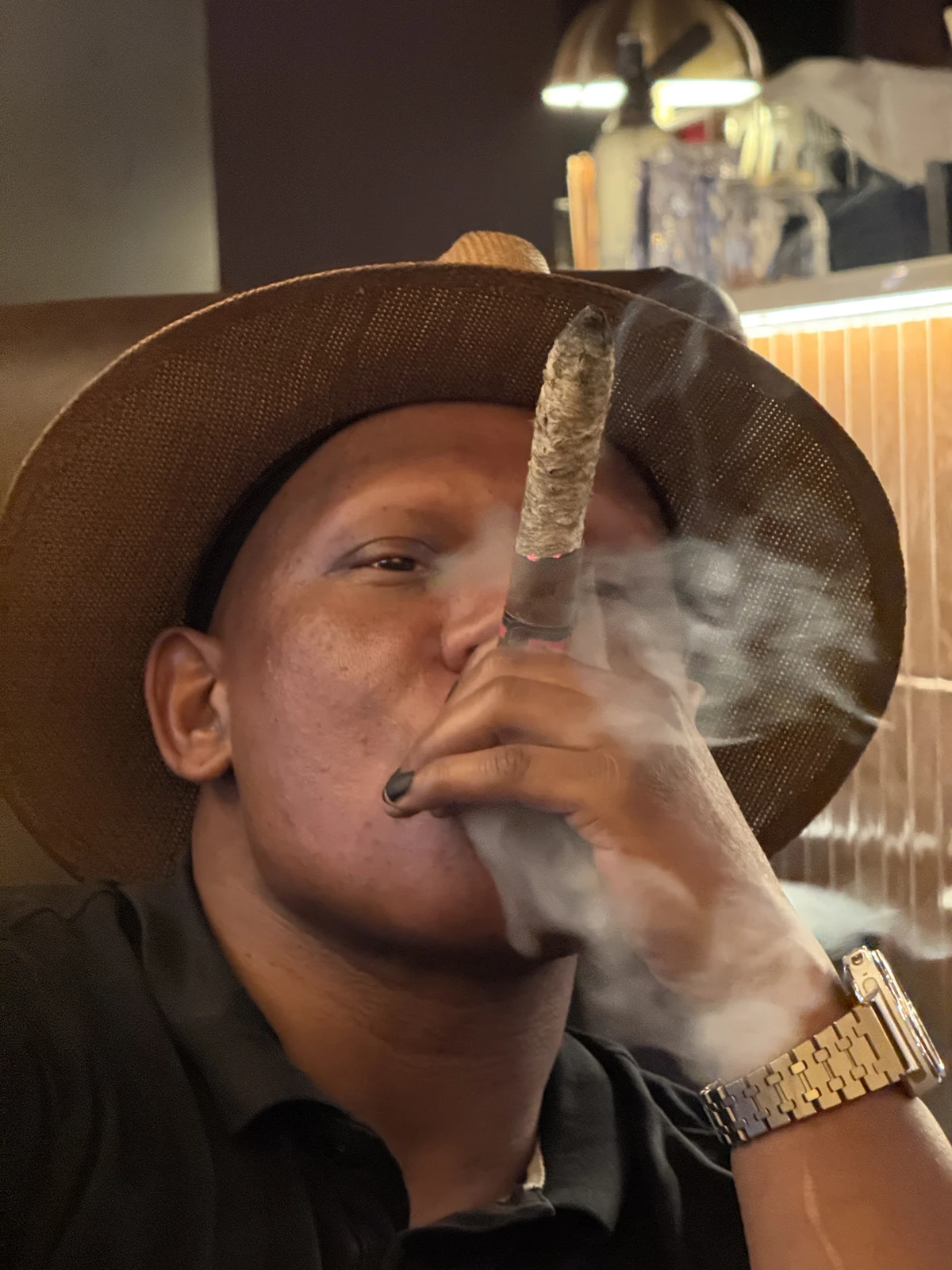
The ash of a cigar is not a definitive judgment. And yet, it reveals something. Those who judge a cigar by its ash are observing a moment when craftsmanship, tobacco, and personal smoking style become visible. The ash can offer clues—about the burn, the construction, and the leisurely way the cigar is smoked. However, it never replaces the flavor, the draw, or the overall quality of the experience.
Especially with a hand-rolled premium cigar, its true value lies in the overall impression. A flawless, light-colored ash can be impressive. However, what ultimately matters is whether the aromas develop clearly, the smoke remains pleasantly cool, and the cigar maintains its balance from the first puff to the last. The art of enjoyment begins not with a quick judgment, but with attentive observation.
What the ash of a cigar actually reveals
Ash is produced when the organic components of tobacco burn, leaving behind mineral residues. Its color and texture are therefore influenced by far more than just the quality of the leaf: soil and nutrients, the tobacco's position on the plant, fermentation, curing, the wrapper leaf, humidity, and the intensity of the embers all play a role.
A carefully crafted cigar often burns evenly. The ash stays together for a while without immediately breaking, and then falls off at a natural moment. This can indicate a balanced filler and precise rolling. However, it's not conclusive evidence. Even an excellently made cigar can develop brittle ash in windy conditions, dry air, or if smoked too quickly.
The ash is therefore an indicator, not a certificate. Experts read it like a footnote to the smoke's progression – never like the whole book.
Judging a cigar by its ash: Three telling characteristics
The color: interesting, but not a quality ranking.
White, silver-gray, dark gray, or almost black: many rules circulate regarding the color of cigar ash. Particularly light ash is often interpreted as a sign of special quality. Indeed, it can indicate a higher proportion of certain minerals in the tobacco. However, no reliable ranking can be derived from this.
A darker ash tone is not automatically a defect. Dark, oily wrappers , different tobacco seeds, or a particular burning characteristic can alter the appearance. Therefore, when considering color, consistency should be the primary indicator: If the ash appears uniform and corresponds to a clean burn, this is more telling than its exact shade.
The firmness: an indication of the rolling resistance
A long, stable column of ash makes an impressive statement and often indicates that the kindling was carefully distributed with tension. The leaves support each other, the draft remains controlled, and the embers find their way. Especially in larger formats, this interplay is a visible expression of craftsmanship and precision.
But even here, moderation is key. A cigar doesn't need to have several centimeters of ash to be excellent. If it's moved around, smoked too quickly, or repeatedly put down during a lively conversation, even a solid ash will break sooner. Deliberately holding it until the very last second is more of a test of patience than a quality criterion.
The structure: pay attention to uniformity.
Look for a closed, finely layered structure. This indicates that combustion is smooth across the cross-section. If the ash appears flaky, crumbles unusually early, or shows noticeable cracks, this could indicate uneven packing, improper storage, or an erratic smoking style.
A single crack doesn't warrant judgment. Only when this behavior recurs, and at the same time the burn becomes uneven, the draw fluctuates, or the cigar becomes bitter and hot, does a picture emerge that demands attention.
What ash doesn't reveal about a cigar
Perhaps the most valuable insight for the discerning aficionado is this: ash cannot measure aromatic depth. It reveals little about whether a blend develops nuances of cedar, roasted nuts, cocoa, leather, or subtle spices. It doesn't capture whether the transitions are harmonious or whether the character of a cigar remains compelling over the course of an hour.
The maturity of a tobacco cannot simply be determined by its ash. Carefully matured leaves reveal their quality primarily in their aroma before lighting, in the texture of the smoke, and in the balance between strength and elegance. A beautiful ash complements this experience; it does not define it.
Caution is also advised regarding the often-repeated claim that only white ash proves purely natural tobacco. A reliable assessment cannot be derived from this. The ash color depends on natural factors, but it is not a laboratory report and no substitute for origin, processing, and trustworthy selection.
The correct look while smoking
Don't start with the ash, but with the cut and the cold draw. Is the draw pleasantly open, but not empty? Does the unlit tobacco release a clear, clean aroma? After lighting, observe the burn line. It may vary slightly, but should stabilize after a few steady puffs.
Smoke slowly. A high-quality cigar requires no haste. Allow it to breathe between puffs so the ember doesn't overheat and delicate aromas aren't masked by harshness. Puffing too frequently also alters the ash: it becomes lighter, less stable, and can appear darker. This would then be less a comment on the cigar itself than on the speed of its smoker.
Let the ash fall naturally, ideally into a generously sized ashtray. A gentle tap is acceptable once it starts to detach. Vigorous tapping will unnecessarily break the embers and can disrupt an otherwise even burn. A cigar is not an object to be controlled; it is a companion to which one gives time.
If the cigarette is slightly tilted, it's often enough to turn the slower-burning side slightly towards the flame on the next puff. Only if the burn becomes significantly unbalanced is careful relighting advisable. The flame should not burn the wrapper, but only rekindle the embers.
Storage, format and the moment itself
A cigar only reveals its full potential when stored correctly. If it's too dry , it usually burns faster and hotter, the ash becomes more fragile, and the aromas lose their roundness. If it's too moist, the draw can become difficult, the burn uneven, and the ash darker or denser. Ideally, observation should therefore begin long before lighting.
The format also affects perception . A slim ring gauge often reacts more immediately to draw frequency and air movement. More voluminous formats contain more tobacco and can produce a longer, more stable ash, but need time to find their center. It would be wrong to judge both by the same standard.
The setting also significantly influences the smoking experience. On a terrace in Zurich, in a lounge in Bangkok, or in the intimate setting of the Caminovation Club, temperature, air currents, and conversation all affect the rhythm. A cigar isn't smoked in a vacuum. This is precisely why the ash has its appeal: it captures, for a fleeting moment, how the tobacco, the craftsmanship, and the atmosphere came together.
Those who contemplate the ash with serenity gain a more refined perspective on the cigar itself. It is not the length of the ash that remains in memory, but rather the quality of the time it accompanied.